
Learn and Implement Read Between the Lions Reading Skills Program in Three Easy Steps
Screen
Remediate
Practice

Quick Links
This reading skills program was developed to identify a keystone visual skill, jump eye movements. This skill is NECESSARY for readers of all ages.
RBTL is designed to identify a lack of coordinated jump eye movements using three timed eye movement tests in about 5 minutes. Statistically, 20% of the population through all ages, cannot track for reading using jump eye movements. The next step is to offer practical, user-friendly remediation proven to train the eye muscles to work together by using repetitive focusing techniques and including eye-hand coordination fine motor skills.
Early detection is the key to getting children on track to be successful readers. We used Nevada's 2015 Read by Grade 3 Program as our goal. It is the law in many states that children must read to a standard by the end of grade 3 or face being held back. We developed the program for use starting with first graders (6 years old). This is the age they begin to use their eyes to read.
The Lions Clubs volunteer pilot program was introduced in the Washoe County School District in Reno, Nevada, using mass screenings of several hundred children.
Phase 1: Screening Reading Skills and Jump Eye Movements
We will use a simple process to test reading skills related to jump eye movements:
Stopwatch
Screening Sheets
Score Sheets
Watch the video for detailed instructions, then follow the steps below.
-
Step 1: Prepare the Setup
Seat the person in a well-lit area and ensure they wear reading glasses or lenses if needed.
-
Step 2: Fill in Information
Write down the person's name, age, and date on the result sheet. After screening give them the sheet for reference.
-
Step 3: Explain the Screening
Briefly describe the purpose of the screening is to check for coordinated jump eye movements used during reading.
-
Step 4: Demonstrate Eye Movements
Show how your eyes move while reading to give them an idea of what to expect.
-
Step 5: Lion Direction
Display the Demonstration page with a lion indicating the reading direction, starting from the top left.
-
Step 6: Read and Move
Explain how to read each line from left to right, moving down without using the head or finger to guide.
-
Step 7: Pages One, Two, Three
Clarify there are three pages, progressively harder. Instruct to read swiftly without errors.
-
Step 8: Conduct the Screening
Have a stopwatch, pen, and result sheet ready. Ask the person to begin reading each page, timing their progress.
-
Step 9: Record and Evaluate
Note errors and skipped or added numbers. Calculate time, deducting for app use. Mark results as AA, B, or AR using a score sheet.
A Note about Screening Results: Total screening results are recorded as AA-Age Appropriate, B-Borderline, and AR-At Risk
All persons with At-Risk and Borderline results (lacking coordinated jump eye movements) will benefit from the repetitive focusing techniques comprising the remediation regimen below. Read Between the Lions offers remediation steps proven to train eye muscles to work together more efficiently and help achieve an invaluable reading skill using jump eye movements.
Phase 2: Remediation Training with a Metronome
In this phase, each step builds upon the last. Your reading skills will improve with just 10 minutes of practice each day. You’ll need:
Metronome on phone app or website
Remediation worksheets
A marker
Watch the video for detailed instructions for following the steps below.
Metronome Practice
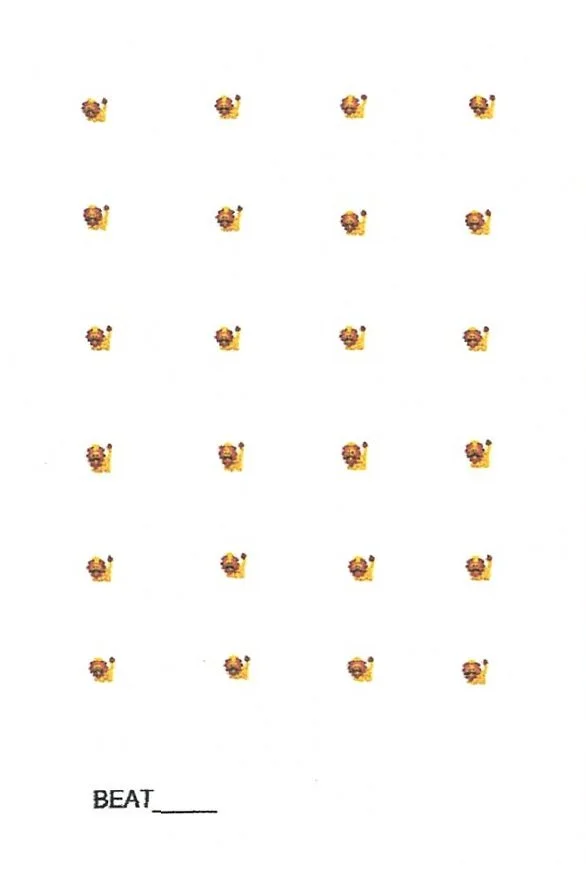
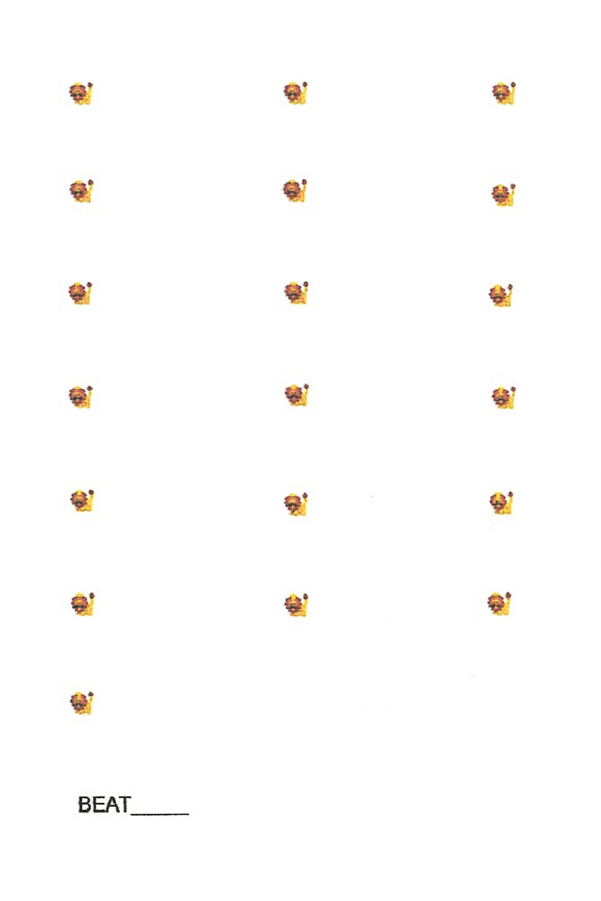
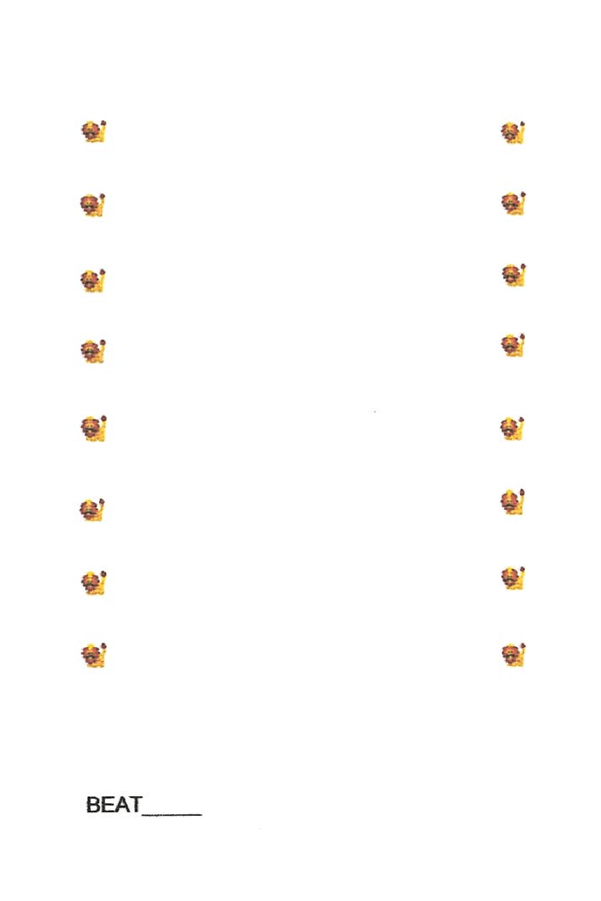
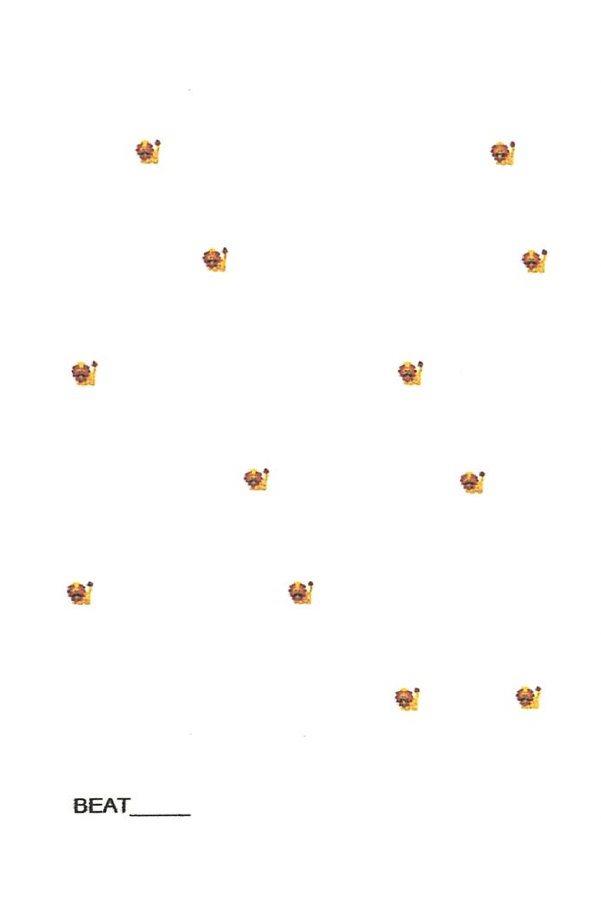
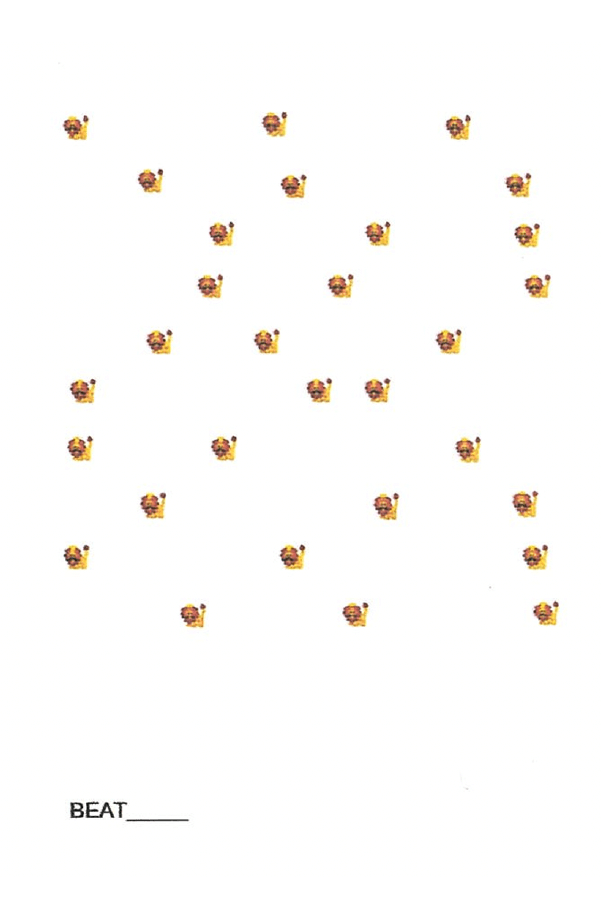
Use a handheld phone app or our website metronome. Start at 80 beats per minute. The goal for each page is to work your way up to 120 bpm with accuracy.
-
Step 1: Four Lions per Line
-
Step 2: Three Lions per Line
-
Step 3: Two Lions per Line
-
Step 4: Two Random Lions
-
Step 5: Three Random Lions
-
Tip 1: Advanced Challenge
For a more challenging task, attempt a set of three lions that require precise coordination. Use a higher metronome speed, like 120 BPM.
-
Tip 2: Concentration and Flow
During these exercises, stay focused and concentrated on the task. This will help you enter a "flow state," where you're fully engaged and improving.
-
Tip 3: Progression
Start with easier tasks and gradually increase the difficulty. Achieving accuracy and coordination will help your reading skills.
Phase 3: Practice for Advanced Reading Skills
This advanced phase builds upon the skills you've developed in earlier stages. You'll become a more efficient reader by consistently challenging yourself and gradually improving your reading speed. Enjoy the journey of enhancing your reading abilities!
Watch the video for detailed instructions for following the steps below.
Challenge 1 Out Loud with Metronome
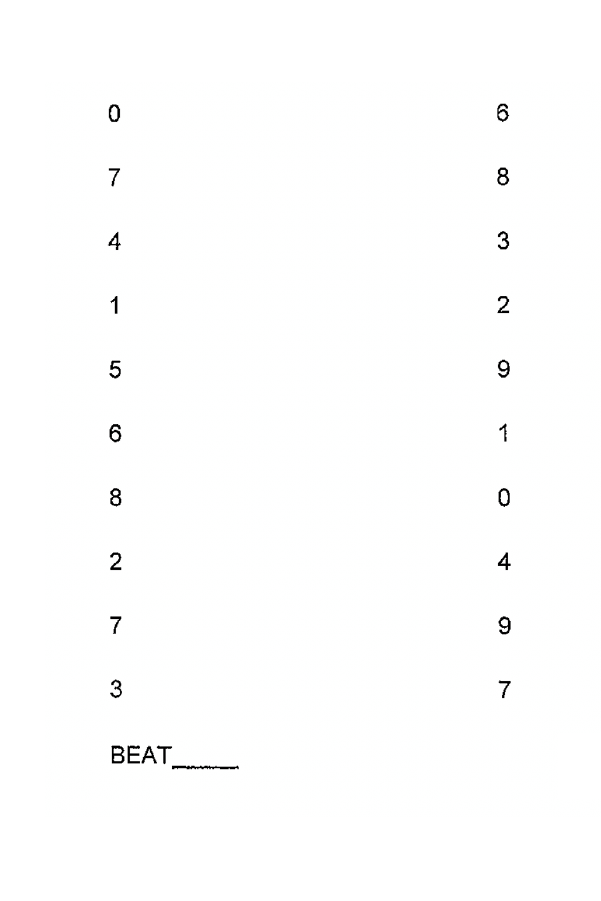
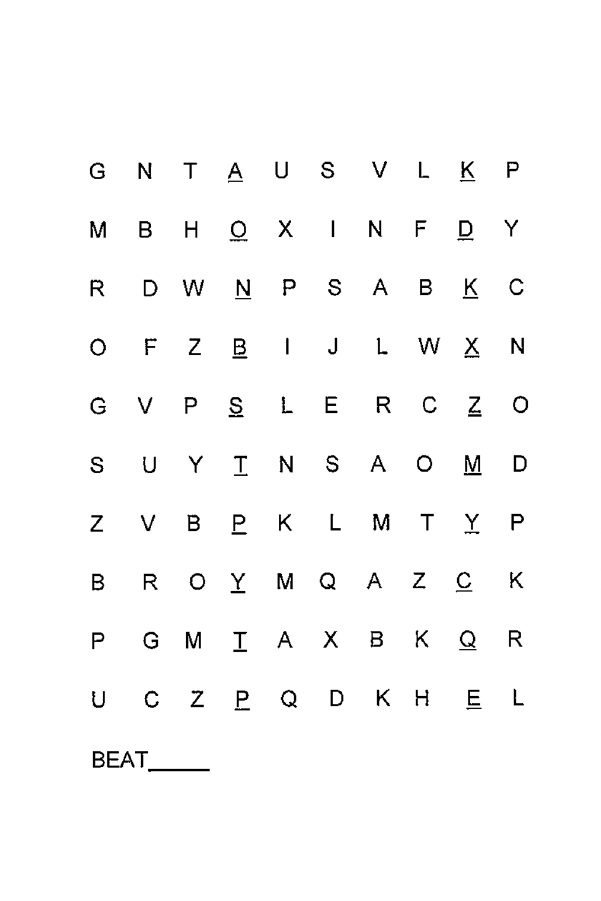
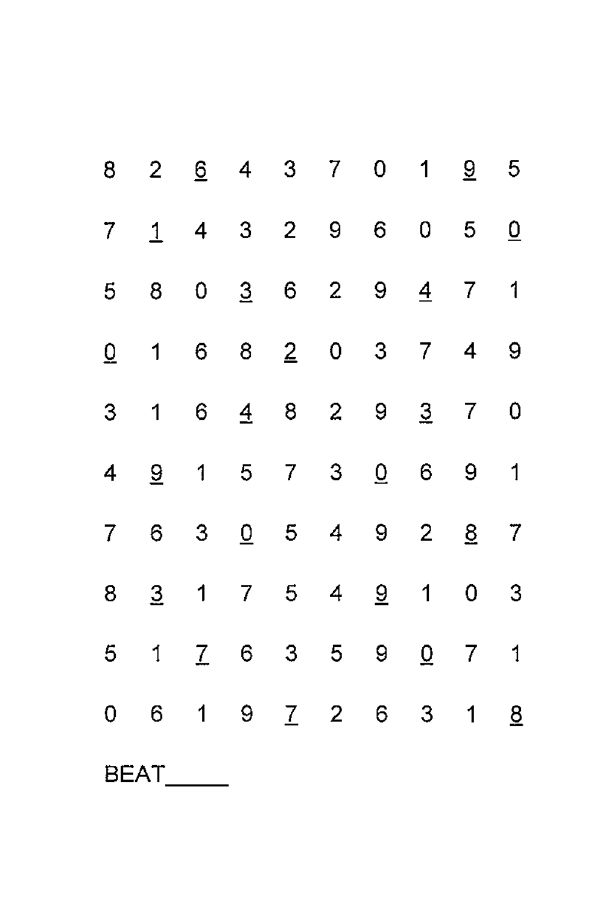
Say the numbers or letters out loud on the metronome beat. Read top to bottom, left to right as you would a book. Choose a starting pace and work up to 120 bpm with accuracy. Progress through the Advanced Practice pages to increase the challenge.
-
Step 1: Say underlined numbers or letters back and forth
-
Step 2: Say randomly underlined letters or numbers
-
Step 3: Say randomly underlined letters or numbers
-
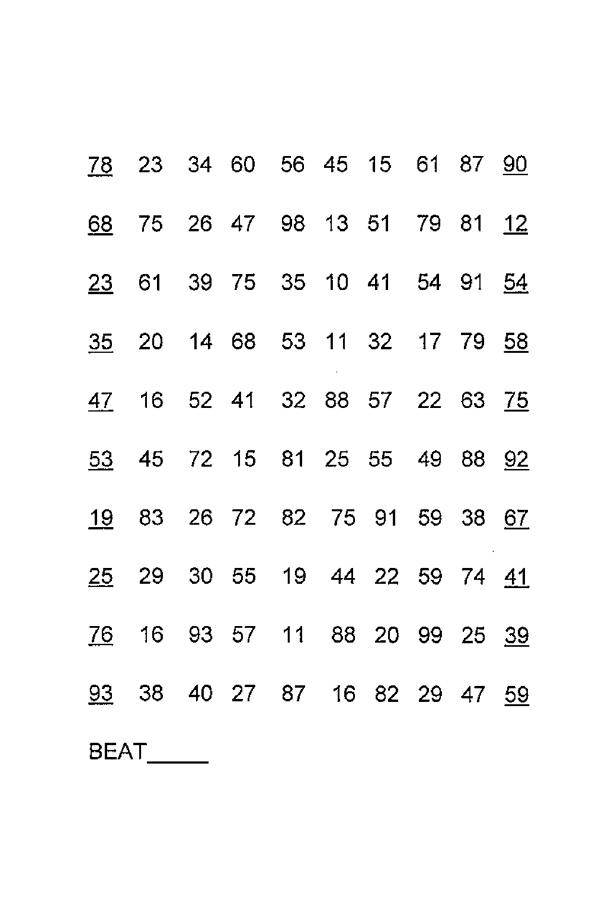
Step 4: Say outer number or letter of underlined pairs
-
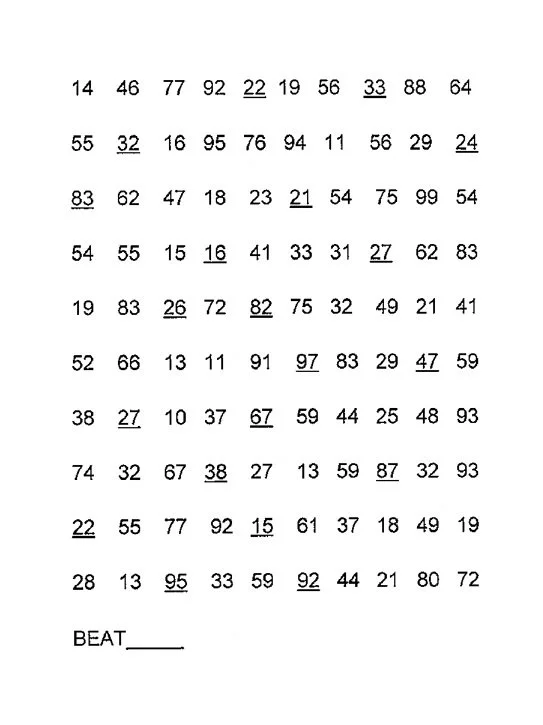
Step 5: Say outer number or letter of randomly underlined pairs
-
Tip 1: Practice & Enjoy Reading
Consistently practice these exercises, gradually increasing your speed while maintaining accuracy. You’ll see big improvements with 10 minutes of daily practice. The goal is to improve your reading skills while enjoying the process.
-
Tip 2: Take Regular Breaks
Every ten minutes, look up and focus 20 feet away. Every 30 minutes, stop and move your body for five minutes. Studies show speed and comprehension decrease after 10 minutes of continuous reading.
Challenge 2 Using a Book or Kindle
Challenge your reading skills further using a Kindle or physical book.
-
First & Last Letter Challenge
For every line on a page, read only the first and last letters of the line. Don't focus on the content, just the letters. Keep practicing this method for 100 lines or around four to five pages. Maintain a metronome beat, focus on accuracy. Start at 80 beats per minute and progress to 120 bpm.
-
Five 20-Line Races Timing Challenge
Read the first and last letter of each line for twenty lines, out loud, without the metronome. As you complete each time with accuracy, set a goal of 25 seconds, then 20 seconds, 18 seconds, 15 seconds, 13 seconds, 12 seconds, 11 seconds, and ideally 10 seconds.
Do You Have Questions? We Are Here to Help!
Access to our dedicated experts for ongoing support and guidance. They’ll help you navigate challenges and ensure a positive experience for you and your readers.